Practical cleaning support for scrubber dryers, industrial vacuums, and facility teams. Talk with a floor care advisor
Industry applications

Numatic cleaning routes by facility type and region

Cleaning equipment succeeds when it respects the building. Warehouses, retail estates, hospitals, campuses, and food production areas all ask different questions about floor drying, debris pickup, storage, and operator movement.

Matched to how sites run

Match machine advice to the way each site runs

The same scrubber dryer or vacuum family can behave differently across a public concourse, a cold loading bay, or a quiet corridor. These application notes organize the discussion by place, traffic, and cleaning window.
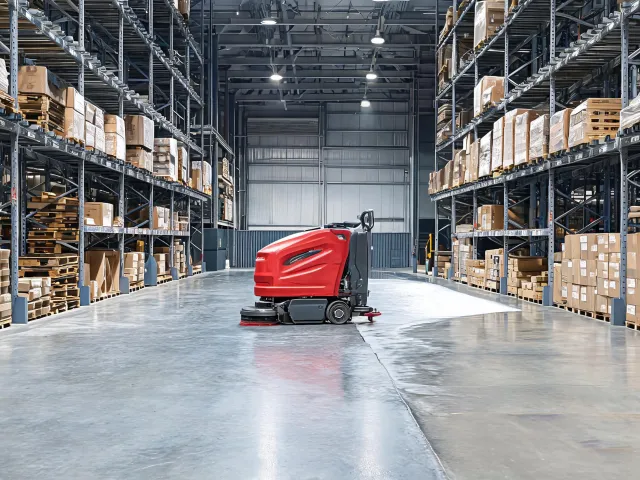
Warehouse cleaning route with scrubber dryer

Warehouse and logistics

Large aisles, pallet dust, loading bay grit, and tight shift windows push buyers toward scrubber dryer recovery, durable vacuum accessories, and clear operator routines. The key is planning around turning radius, tank emptying points, and the moments when forklifts are away from the lane. A walk-behind scrubber dryer with a 500 to 700 mm cleaning path and a 40 to 70 litre solution tank suits cross-aisle work, while a ride-on becomes worth the charging window once a single route passes roughly 3,000 m2 per shift.
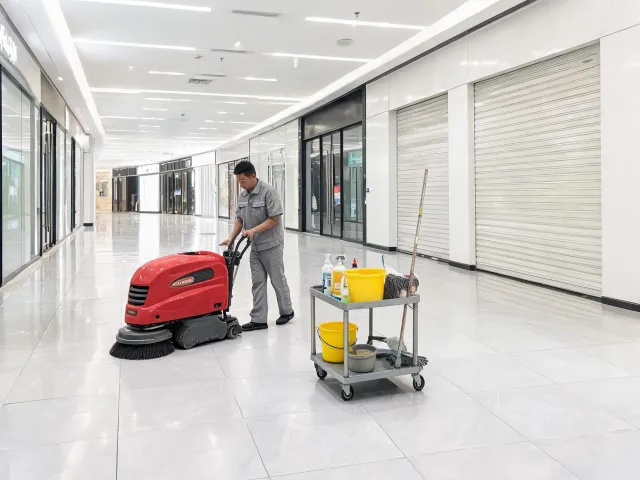
Retail concourse cleaning with compact equipment

Retail, hospitality, and municipal buildings

Public spaces need equipment that can work around people, signage, lifts, and narrow back-of-house storage. Noise, cable management, water pickup, and friendly handover notes can be as important as the headline machine size.
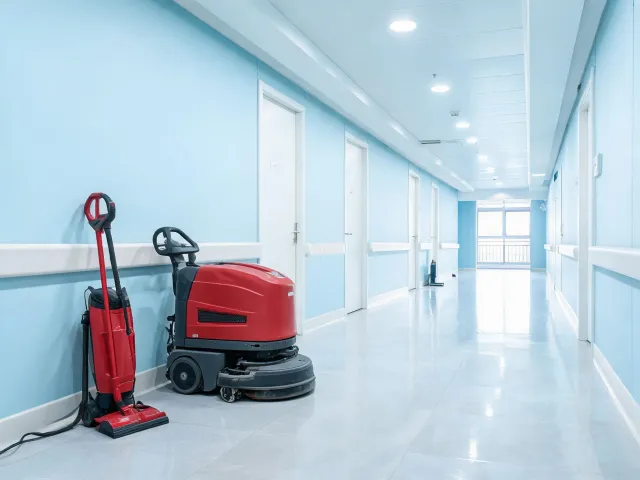
Healthcare corridor cleaning equipment

Healthcare and education

Care and campus teams often balance frequent cleaning with occupied rooms, varied floor finishes, and staff turnover. Recommendations should make daily checks obvious, keep accessories organized, and support quieter routines where people are learning, resting, or moving between services. Vacuum noise is a real constraint here: a unit rated near 55 to 62 dB(A) can run beside occupied rooms, and HEPA-grade filtration (typically rated to capture 99.97% of particles at 0.3 microns) matters where fine dust is a clinical or respiratory concern rather than just an appearance issue.

Water recovery planning92
Storage and access fit84
Dust and debris control78
Operator training simplicity71

Scores are internal planning weights used on this site to keep the conversation focused. They are not performance claims; they show which questions typically drive the recommendation for each facility type.

Trade-offs by site type

Selection trade-offs facility teams weigh by site type

There is rarely one right machine for a building. The honest discussion is about what each method gives up. These are the comparisons Numatic raises before a model is named, drawn from how scrubbers and vacuums actually behave in the field rather than a feature checklist.

Wet recovery vs. dry vacuuming

A scrubber dryer washes and lifts water in one pass, leaving a floor that can reopen in a few minutes, but it adds detergent dosing, recovery tank emptying, and squeegee wear. A dry industrial vacuum skips water handling entirely and reaches tight corners a squeegee cannot, yet it only removes loose debris and dust, not adhered soil. Mixed-soil sites often need both, staged across the cleaning window rather than one machine forced to do everything.

Single-motor vs. twin-motor suction

A single-motor vacuum (around 1,000 to 1,200 W) is lighter, quieter, and cheaper to maintain, suiting offices and corridors. A twin-motor or higher-airflow unit moves more debris over large or coarse floors but draws more power, runs louder, and clogs filters faster in fine dust. The right choice follows the dust type and the noise tolerance of the space, not the headline wattage.

Standard vs. HEPA filtration

Standard cartridge filtration is enough for general debris and keeps running costs low. HEPA-grade media protects occupants where fine or hazardous dust is in play, but it restricts airflow, demands more frequent filter changes, and raises consumable cost. Specifying HEPA where it is not needed quietly slows the machine and inflates the parts budget.

Where this guidance stops

Limits to keep the recommendation honest

Coverage figures assume open floors

Quoted area-per-shift rates apply to clear runs. Frequent doorways, racking ends, parked stock, or shared traffic can cut real output well below the planning figure, so on-site walkthroughs override any number on this page.

Battery runtime is not fixed

A scrubber rated for around 2.5 to 4 hours of work depends on brush pressure, water flow, and floor soil. Heavier scrubbing and dirtier floors shorten that window, so charging routines should be planned with a margin rather than the maximum figure.

Vacuum and scrubber specs cannot be checked remotely

Suction, airflow, and filtration ratings describe the unit, not the dust in your building. Numatic reads every figure here as a shortlist signal, then proves it with a recovery test on your own debris before anyone commits.

Bring your facility context

Ask for a recommendation by building type, not only by machine type.

Share the industry, floor finish, cleaning window, storage space, and current pain point. Numatic can help compare practical scrubber, vacuum, and accessory routes before the quote becomes a model list.